

Friends of Chamber Music bring the world’s best chamber music to Vancouver. Actually, we have been doing so for decades, with 2025-2026 marking our 78th season of providing Greater Vancouver with the delights of the finest of live chamber music. We were honoured to dedicate this past season to the memory of the late Eric Wilson (1928-2025), a core member of our volunteer board of directors for 63 years. Eric helped ensure that Friends brought the world’s best chamber music here during the many decades that he led our programming committee. Amazingly, he finished booking artists for the 2025-2026 series only weeks before his death in early January 2025.
While Eric had booked groups to play all the concerts, he was not here to deal with the last-minute issues that arose during the past season. As well, he did not have time to choose the music for the concerts. Without Eric’s involvement, the artistic planning for upcoming seasons has been taken on by Paris Simons, a longtime member of the next generation on the Friends board of directors.
Check out the first season of concerts planned by this next generation, including some fabulous familiar friends, and some exciting ensembles making their Friends debuts.
Rather than reviewing the calendar year, we can consider our last completed concert season, running from fall through winter and spring. The 2025-2026 season started with the Aris Quartett, a young German string quartet that was new to us.
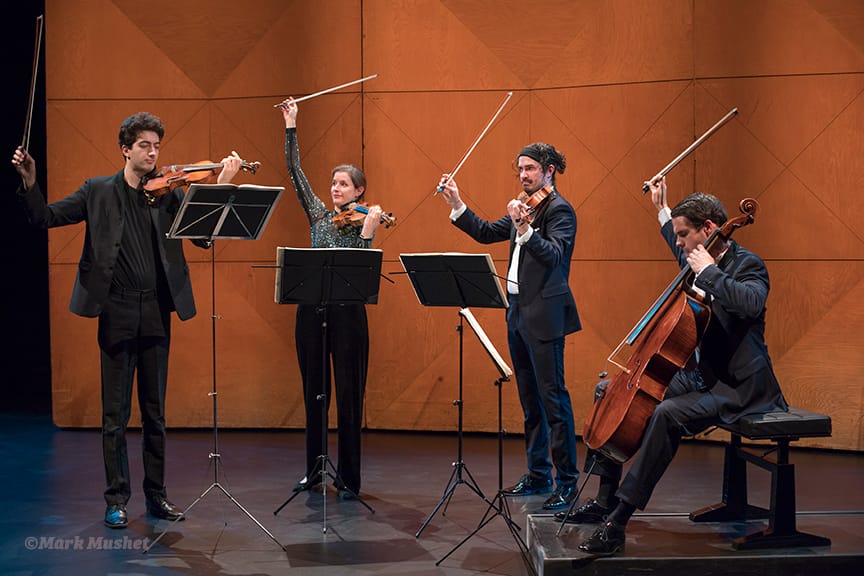
Only weeks before launching their North American tour, the group had to find a temporary replacement for their first violinist. A first violinist is crucial to the sound of a string quartet so they needed a musician who could lead the group and blend with the other three players. Violinist Stephen Waarts stepped into the gap. Some may remember that he had visited Vancouver previously to play for the Vancouver Recital Society. After making one change to the programme, he fit seamlessly into the Aris Quartett lineup. With only a few days rehearsal time before the concert, Haydn’s Opus 76 No. 4 “Sunrise” was substituted for Ligeti’s “Metamorphoses Nocturnes”, as it would have taken more time than they had available to prepare the Ligeti piece. We also enjoyed hearing Felix Mendelssohn’s Opus 12 and Beethoven’s Opus 59 No. 1 “Razumovsky” quartets in concert.
Eric Wilson had booked the Esmé Quartet from South Korea for our second concert. However, they were teaching at an American university all year, and were advised that if they came here, one of the musicians likely would not be allowed back into the USA. We received the news that they would have to cancel their appearance with Friends only 12 days before the scheduled concert.
After anxious emails and phone calls to several agents, we were fortunate to connect with the Jasper String Quartet.

These musicians kindly agreed to step in and play for us on the announced date. After playing a concert the night before on the US East Coast, they flew to Vancouver in the morning, played a lovely and engaging concert for us, and after a few hours sleep, flew back to the US East Coast the next morning for their next performance. They presented their current programme, Haydn’s Opus 76 No. 5, Gabriela Lena Frank’s Leyendas: An Andean Walkabout for String Quartet (2001), and Debussy’s String Quartet, all of which were warmly received by our audience. And this meant that both Haydn’s Opus 76 Nos. 4 and 5 were played for us in October. (Plus, composer Gabriela Lena Frank has since received the 2026 Pulitzer Prize for Music. Her new piece, “Quijotadas”, will be part of the Takács Quartet concert on September 22, 2026.)
While Quatuor Modigliani and Cuarteto Casals played delightful concerts for us in November 2025 and February 2026 respectively, we were grateful to have no additional drama beyond the pleasure of welcoming both groups back to Vancouver and enjoying their musicality while playing great repertoire.

The Modigliani gave us another late Haydn quartet, Opus 77 No. 2 (the composer’s final completed quartet), as well as 12 Microludes, Opus 13 by Gyorgy Kurtag (who was just short of turning 100 years old on the date of the concert), and Brahms’ Opus 51 No. 2. We were graced with a captivating encore – an emotionally dynamic movement from Beethoven’s Opus 18 No. 1. Cuarteto Casals opened with Juan Crisóstomo Arriaga’s String Quartet No. 3. Arriaga is referred to as “the Spanish Mozart”, and died days before his 20th birthday in 1826.

His music is elegant and beautifully constructed. The Casals followed this classical work with contemporary composer Elisenda Fabregas’ Fiery Earth (a Canadian premiere), and finished their programme with Schubert’s monumental Opus 161, D887 quartet. Their encore, using their baroque bows for a distinct timbral sheen, was one part of J.S. Bach’s “The Art of the Fugue”.
Before the next concert in February 2026, we had another “behind the scenes” dramatic sequence of communications and events. During the summer of 2025, we learned that the Castalian Quartet had decided to disband – despite having a contract to play for us. In talking with the former group’s agent, who also represents other artists we present, we agreed to replace the quartet with a recital by cellist David Finckel and pianist Wu Han. Not only are they a regular recital duo, they are also co-artistic directors of the Chamber Music Society of Lincoln Center, and work together on other projects (including their marriage). We have presented their Chamber Music Society groups on tour in many past seasons.
Ten days before the concert date, the agent told us the concert would have to be cancelled. Wu Han had suffered a wrist and hand injury in October 2025 that was taking longer to heal than expected and would not be able to play as scheduled. As we began taking steps to cancel the concert, we heard back from the agent, asking if we could postpone for two months. We started taking steps to do that and then received word that the concert could go ahead on the original date, but with changes to the programme.
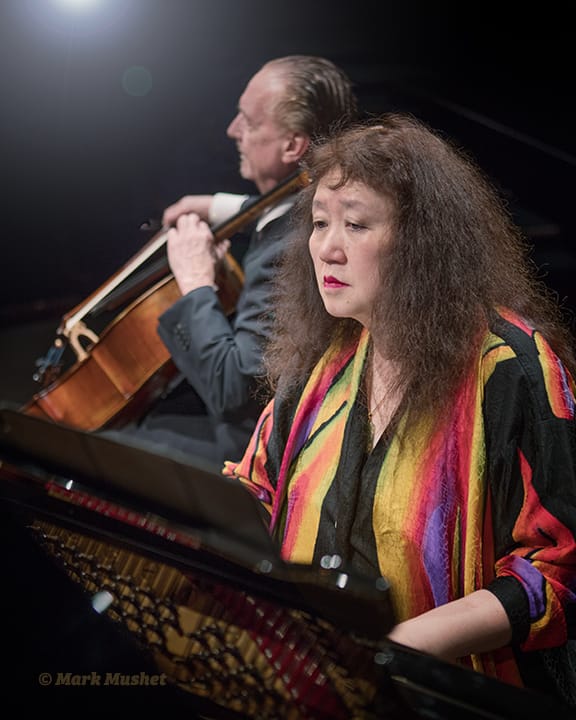
The duo played a fine concert of mostly lighter works (to lessen demands on the pianist) ranging from J.S. Bach to Maurice Ravel, punctuated with fascinating stories about the late superstar cellist Mstislav Rostropovich, David Finckel’s great mentor. The concert highlight was a brilliant performance of Benjamin Britten’s technically challenging Cello Sonata, specially developed and composed for Rostropovich.
After all that backstage anxiety, our next programme featured the Takács Quartet, the first quartet in Wigmore Hall’s “Hall of Fame” and on the list of “greatest string quartets of the past 100 years” for BBC Music Magazine.
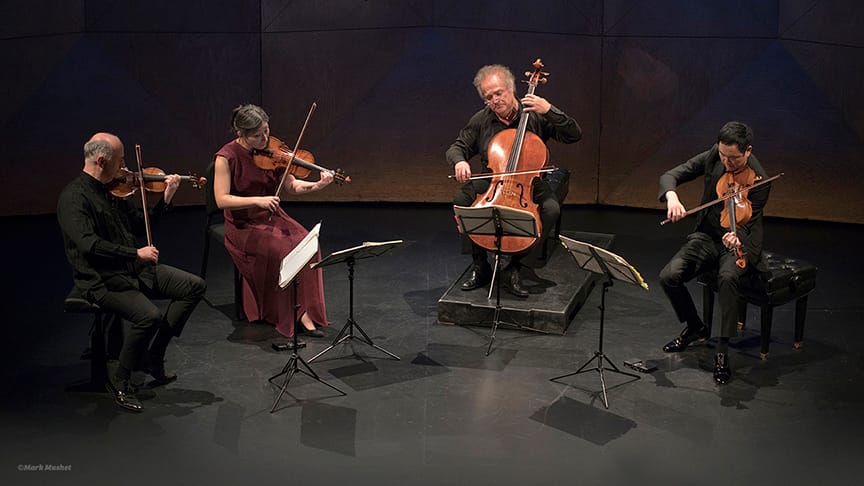
We knew this would be the last Vancouver appearance for the quartet with cellist András Fejér, the final original member of the Takács. He retired from the quartet at the end of this concert season, and this was his 30th Friends concert since the Takács’ first appearance for us on November 9, 1982. This internationally celebrated ensemble played a special all-Beethoven programme for us, featuring an early (Opus 18 No. 2), a middle (Opus 74 “Harp”), and a late quartet (Opus 131) from the great composer’s famous cycle of 16 string quartets.
The wonderful Mandelring Quartett returned to play their ninth concert for us with a programme of Mendelssohn’s Opus 44 No. 1, Victor Ullmann’s String Quartet No. 3, Opus 46 (poignant music by a Jewish composer murdered by the Nazis in the Holocaust), and Beethoven’s Opus 59 No. 1 “Razumovsky”.
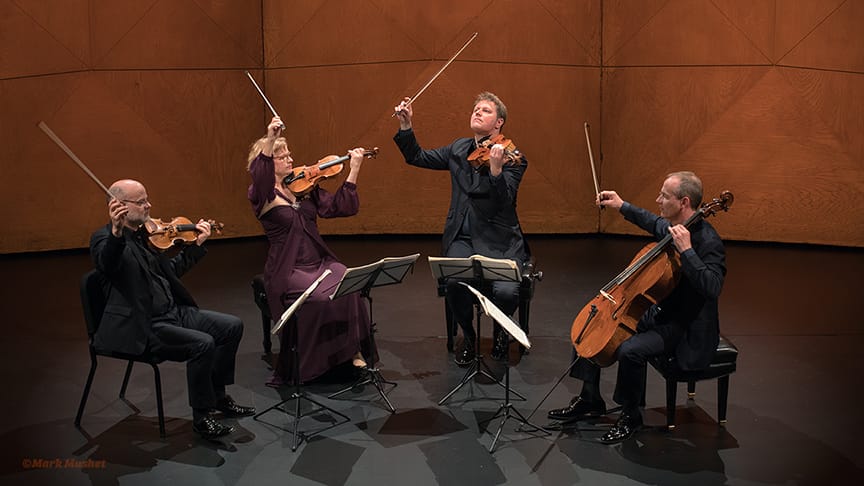
Even though we had heard this great Beethoven music earlier this season, nobody complained about hearing it again. The whole concert was fabulously played, holding the audience rapt.
Trio Bohemo, an exciting young piano trio from Prague, played an electrifying first concert for us that deserved much wider attention.
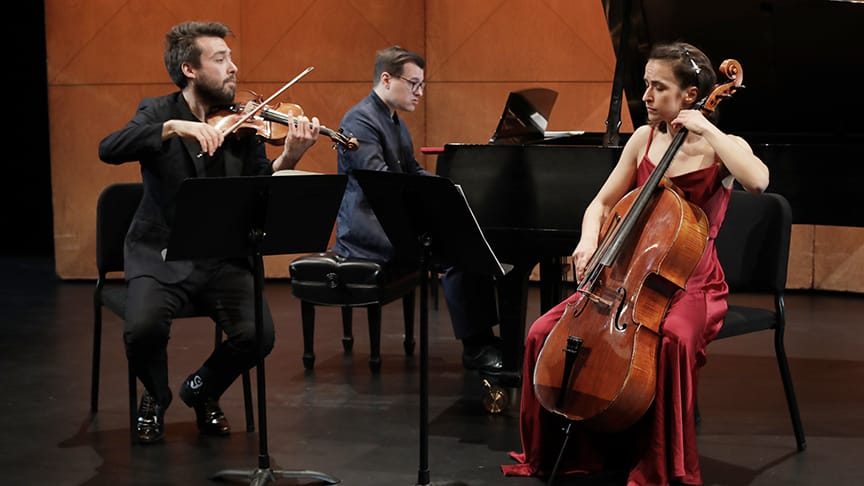
Performing music by Rejcha, Paul Schoenfield’s “Café Music”, and Mendelssohn’s ebullient Piano Trio No. 1, Opus 49, we were impressed, and feel this is a young group with a solid future. Catch them when you can.
The Dover Quartet played their second Friends concert, featuring quartets by Schubert, Bacewicz, and a longer early one by Haydn (Opus 20 No. 4).
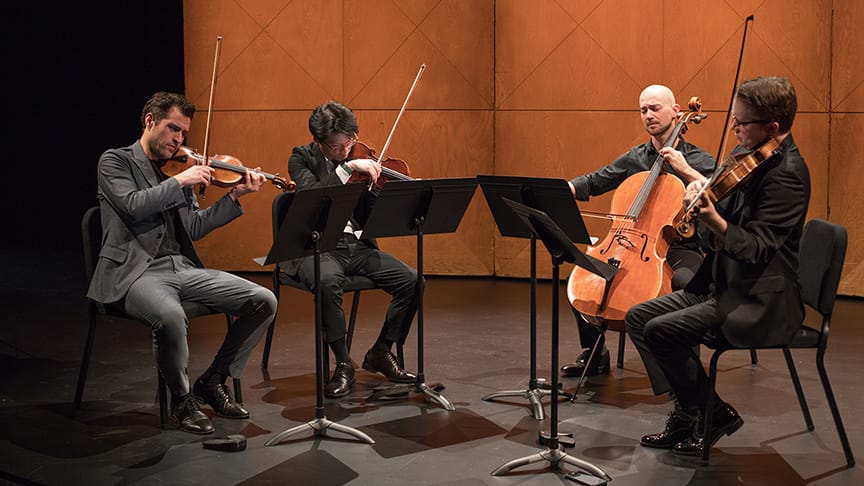
The Dover won all the prizes at the 2013 Banff International String Quartet Competition and BBC Music Magazine placed them on their list of “the greatest string quartets of the past 100 years”. The configuration for this concert was a bit different because Jeremy Berry, violist with the Calidore Quartet (who played for us in 2022) and a friend of the musicians, substituted to cover for this concert. Obviously, the chemistry of the group still worked fine because we heard a wonderful unity and clarity of sound and vision in the performances.
Our season concluded with the Calder Quartet playing an all-American programme for us two days before they played the same music for their Carnegie Hall debut in New York City.

This was the first time a Friends concert featured music by Philip Glass (String Quartet No. 2, “Company” (1984)), Florence Price (String Quartet No. 2 in A Minor (1935)), Ben Johnston (String Quartet No. 4, “Amazing Grace” (1973)), and Andrew Norman (Sabina). Also on the programme was Samuel Barber’s String Quartet in B Minor, Opus 11 (1936), with its exquisite and justly famous “adagio” slow movement – often heard in its arrangement for string orchestra. This adventurous programme brought the group a standing ovation from our sophisticated audience, the kind of enthusiasm shown to all the artists this season.
The “behind the scenes” issues we dealt with over the course of last season were not in themselves unusual. What was surprising were the number of issues that arose in a single concert season, plus how close to the concert dates these snags appeared. And this was the first full season without our late colleague, Eric. We could no longer ask him to resolve issues for us nor could we consult with him as things came up, drawing on his international network and decades of experience. But we rose to meet the challenges and found solutions to ensure that the concert series ran smoothly.
Now we excitedly anticipate a coming season of a wide range of music that will be played by four string quartets, two piano quartets, and two string trios. Many ensembles are returning to play for us after being taken to the hearts of our audience members at previous concerts. Three groups are new to our series and we hope you will welcome them with open ears and artistic curiosity. You can expect another season of beautifully played well-known and lesser-known treasures of chamber music repertoire by significant composers selected from the last two centuries or so. See you at the Vancouver Playhouse starting on September 22, 2026!
(All photos by Mark Mushet.)