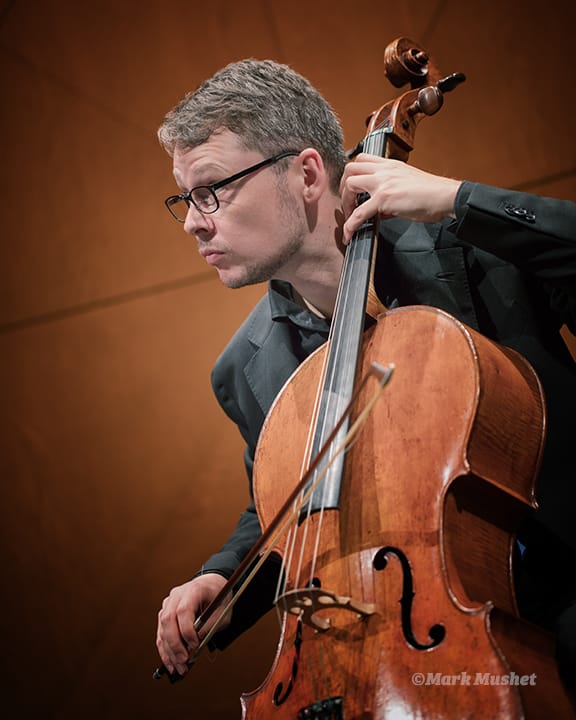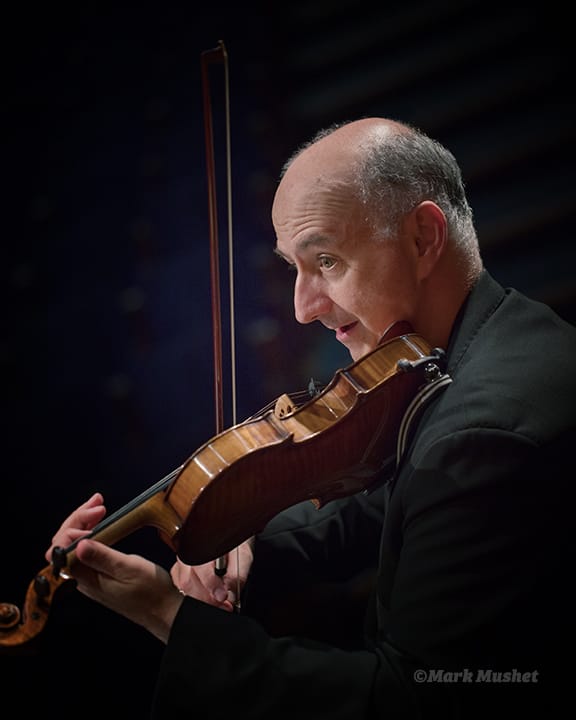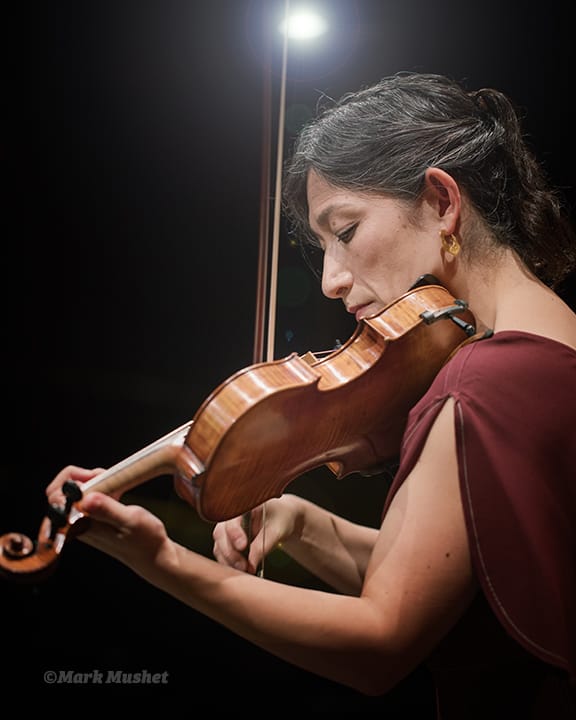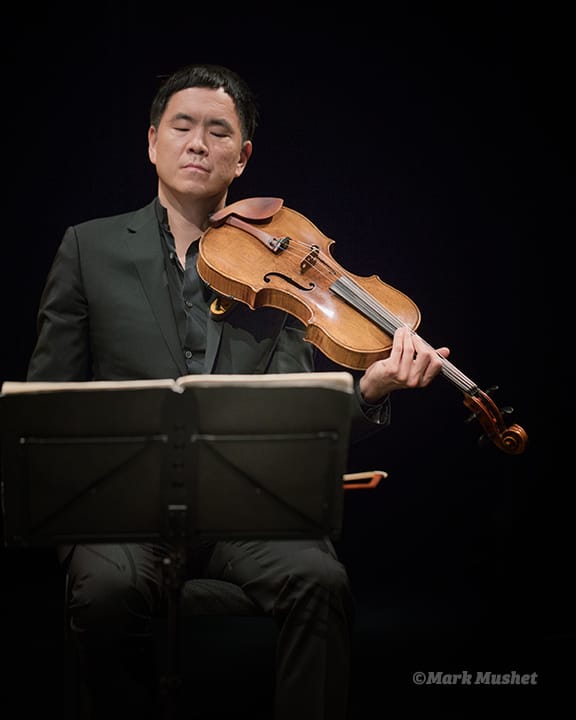

Friends of Chamber Music bring the world’s best chamber music to Vancouver. And on September 22, 2026, that tradition continued when the Takács Quartet’s concert launched our 79th season. This was an important event for several reasons. One of our favourite chamber music ensembles was starting our series. And this internationally celebrated group was playing here for the second time in 2026.
Why did we want to hear the Takács Quartet again so soon?
On February 24 they played three Beethoven string quartets for us. And that was their last Vancouver appearance with founding cellist András Fejér, the last original member of the ensemble. They had already announced that he would retire after 51 years in the group. Therefore, the expressively wide-ranging and beautiful early spring performance was one of special poignancy for our audience, having heard 30 concerts by the Takács Quartet with Mr. Fejér since their first for us in 1982. The quartet received a special ovation at the end of that appearance, partly in thanks for their fine cellist’s career.
We were all curious how one of our favourite string quartets of the past half century would sound now, with the last founding member gone.
We had a similar situation with the Borodin Quartet when they came in spring 2015 to perform Shostakovich string quartet cycle in five extraordinary concerts over nine days. Those concerts happened not long after the retirement of their founding cellist, Valentin Berlinsky. The Russian group quickly laid to rest any concern that the current musicians would be anything less than magnificent playing repertoire in which they had been mentored by their quartet predecessors.
Would the same be true with the Takács Quartet, knowing that the new cellist, Mihai Marica, had been mentored for months by Mr. Fejér?
September 22, we heard the new version of the Takács Quartet play Mendelssohn’s sixth and last string quartet, Opus 80, Gabriela Lena Frank’s “Quijotadas”, and Schubert’s “Death and the Maiden” quartet.
While this is a very mature program, we heard it played by a group whose sound is in transition. The musicians gave a sophisticated and noticeably different interpretation of the music. Their finely balanced blend still allowed for individual expression and powerful instrumental voicing. But with a new cellist playing the same instrument as Mr. Fejér, the impact was different from what we heard in February. Their sound with Mr. Marica, and therefore their artistic choices, felt lighter though without sacrificing feeling and emotion in the sound.
The tragedy in Mendelssohn’s sixth string quartet felt like profound sadness, but without the typical (and sometimes overdone) Romantic anguish. One benefit of this wholly valid interpretation is to help expose the music’s structural “bones” more clearly for us to hear. Their approach was similar in the familiar “Death and the Maiden” – music which sometimes suffers from sounding overly Romantic. Our second introduction to 2026 Pulitzer Prize-winning composer Gabriela Lena Frank’s piece served as a delightful palate cleanser between the two well-known C19th works.
Music is always evolving and a chance to hear a wonderful ensemble playing some of the greatest chamber music ever composed is something to savour. Hearing the amazing Takács Quartet play great string quartets during this period of the group’s evolution with a new cellist was a privilege. Our audience acknowledged that by giving the musicians an extended and very enthusiastic ovation.
This literal example of ongoing renewal was a great way to start a fresh concert season. And it will continue with the dynamic Busch Trio from the Netherlands coming back to Vancouver to play their second concert for us on October 13. They will play one of the greatest piano trios in the repertoire (and a local favourite, given its long association with the Beaux Arts Trio), Dvořák’s “Dumky” Trio, Opus 90, as well as Tchaikovsky’s Piano Trio, Opus 50. Please join us then to hear another of the world’s greatest chamber music groups playing live in Vancouver.