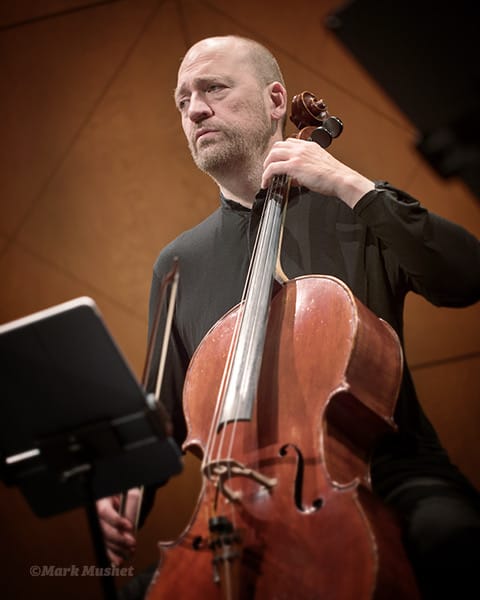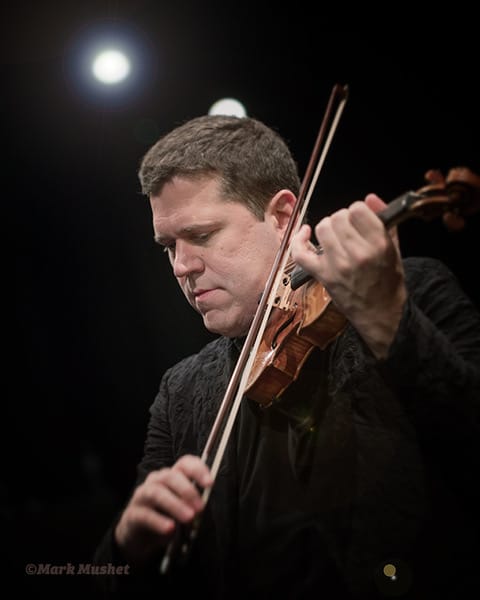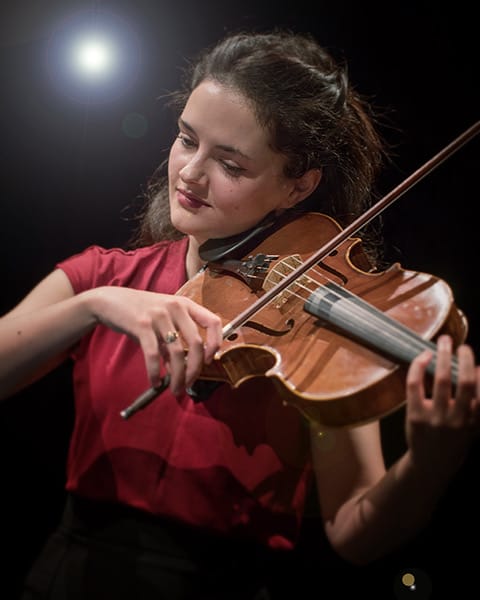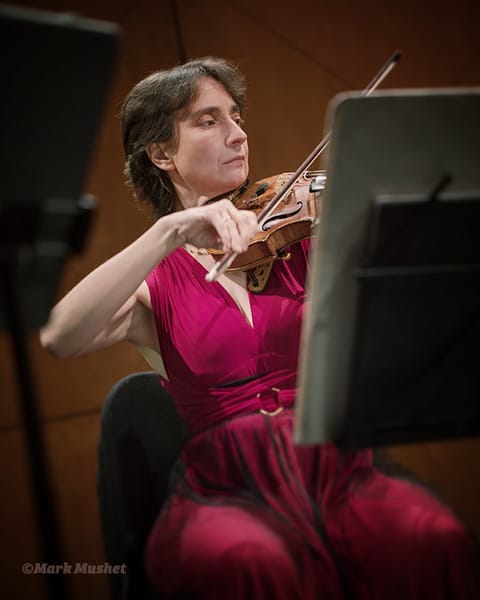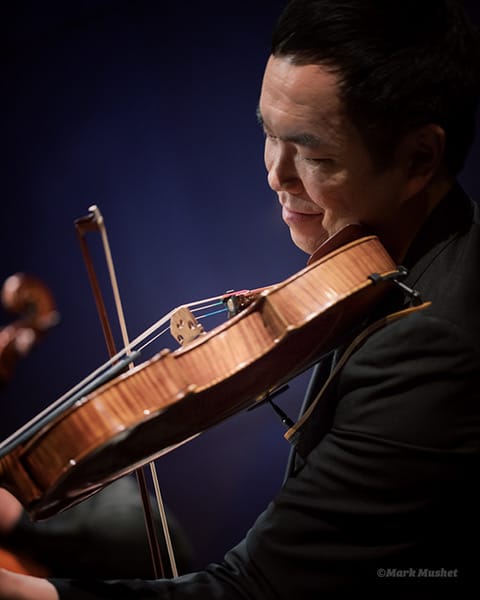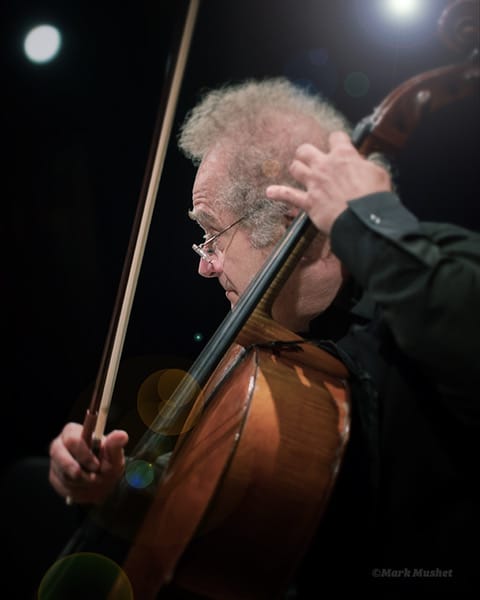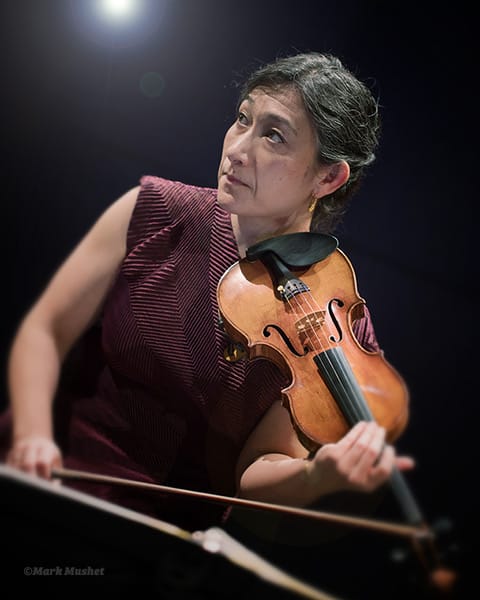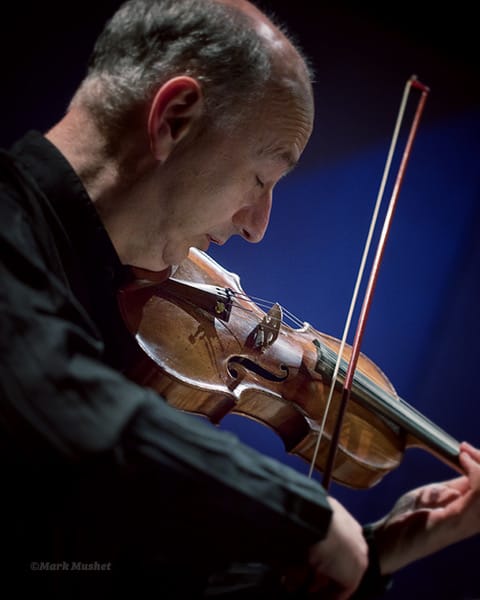


Friends of Chamber Music bring the world’s best chamber music to Vancouver. Now we are in March 2026, after packing February with great music-making. Please join us for an exciting second half of March, with more spectacular music-making to savour from the Mandelring Quartet, Trio Bohémo, and the Dover Quartet.
Turning back to February, on Sunday, 1st of the month, Cuarteto Casals returned to Vancouver three years since their first concert for us. We asked these extraordinary artists to give us a program featuring Spanish music and they obliged. During the concert, the musicians varied the sound of their instruments by playing with different bows. We heard later that they started with “Classical transitional style” bows to play Arriaga’s third quartet, written in 1822 when the composer was 16 years old. This music holds up when compared with late Classical era quartets by Haydn and Mozart, while having a distinctive melodic flavour from this Spanish young man who went on to study briefly in Paris before his untimely death, 10 days before his 20th birthday.
Violinists Vera Martínez Mehner and Abel Tomàs, violist Cristina Cordero, and cellist Arnau Tomàs switched to their “Modern” bows to play the Canadian premiere of Spanish/American composer Elisenda Fábregas’ “Fiery Earth” (2024). This was contemporary music with heart plus tonal clusters that allowed our audience to grasp the feeling and movement in the sound intended by the composer. This new music was given such a persuasive interpretation by the quartet that the applause it garnered was very enthusiastic, a surprise from our audience, many of whom felt it was the highlight of the concert. The Quartet used the same bows to play Schubert’s towering String Quartet No.15 in G Major, Opus 161 D887, lending a keen edge to their tone, as well as both delicacy and power in good measure. People were on their feet at the end and the ovation brought an encore – and another change of bows, this time to play the first set of J.S. Bach’s “The Art of the Fugue” with “Baroque” bows and a distinctively different sound. This change contributed to a fascinating musical experience.
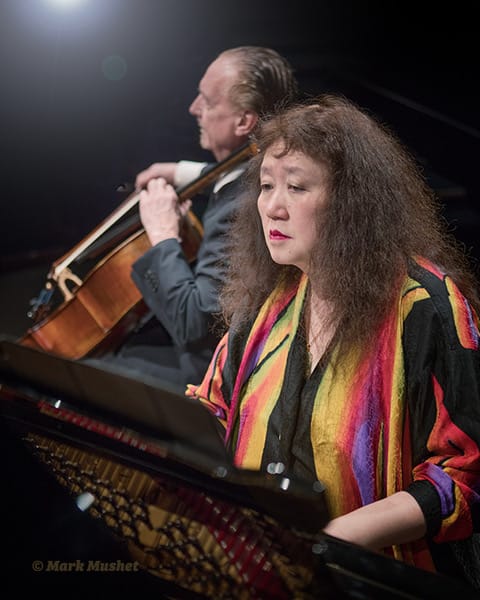
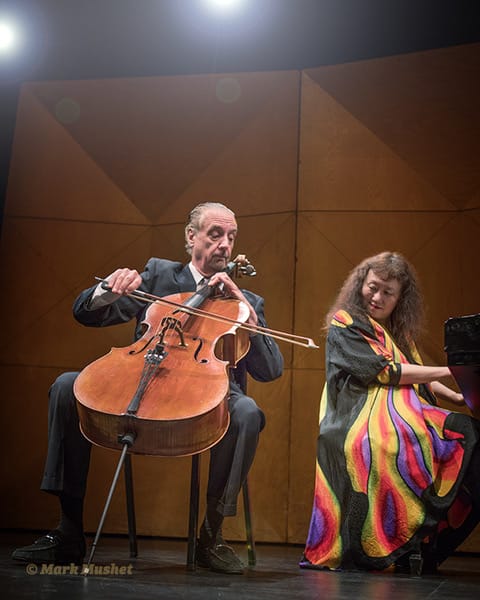
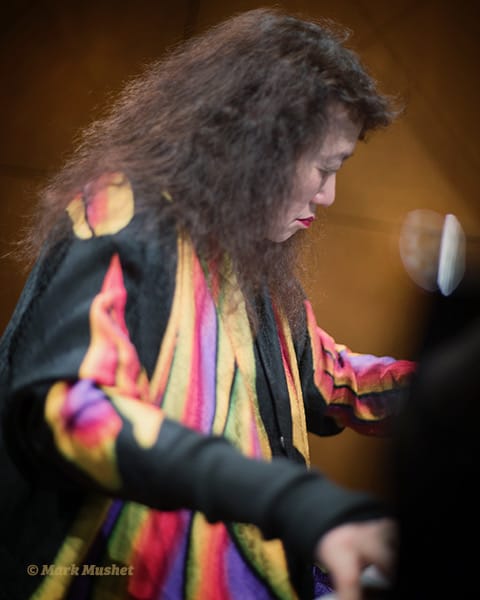
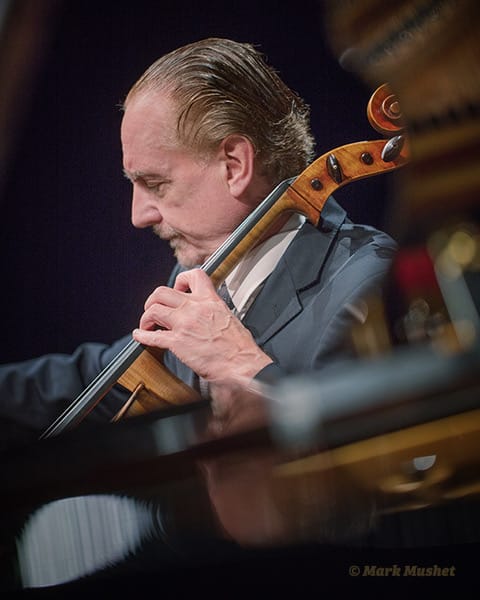
Two weeks later, cellist David Finckel and pianist Wu Han – co-artistic directors of the Chamber Music Society of Lincoln Center and 2/3 of the Han Finckel Setzer Trio – joined us once again for a time-travelling program filled with works beloved by Mr. Finckel’s mentor, the renowned cellist Mstislav Rostropovich. We started with a transcription of an Adagio from the Toccata in C Major for Organ, BWV 564, by J.S. Bach, followed by one of the great Baroque composer’s Sonatas for Viola da Gamba, BWV 1027, then jumped forward to Beethoven’s Cello Sonata No. 3 in A Major, Op 69. All were played with feeling, complete command of phrasing, and balance between the artists. Further time jumps included forays into the French repertoire by Debussy and Ravel before finishing with a Rostropovich commission, Benjamin Britten’s Cello Sonata in C Major, Op 65. We were lucky to benefit from a direct connection back to the great dedicatee when hearing David Finckel effortlessly (as it seemed) move from standard to unusual cello techniques to drawing notes from his rich-toned instrument while interpreting this gorgeously idiomatic music. And Wu Han’s spoken introductions to each piece added to the personal context for the music and its connection to the late superstar, Rostropovich.
On Tuesday, February 24, we were delighted to welcome the Takács Quartet for their 30th concert for Friends in Vancouver since debuting here in 1982. Also, this would be the last Vancouver concert including cellist András Fejér, the final remaining original member of the group. He is retiring after this season, his 51st with the quartet. But the quartet, regarded by many as the greatest currently in the world, will add a new cellist and continue playing.
At this concert, one year before the 200th anniversary of the ever-popular composer’s death, the Takács Quartet gave us an all-Beethoven program, with an Early, Middle, and Late Period quartet. The music of Opus 18 No 2 started us off, loaded with charm and wit, but also marking a distinction from the composer’s influences, most specifically the quartets by Haydn and Mozart. Next came Opus 74, “The Harp”, which received both the attack and nuance that this extraordinary ensemble embedded in their balance, sounding both carefully planned and paradoxically spontaneous. This Quartet continues to build on its strengths, and their interpretation of this music has evolved from when they recorded the monumental cycle of Beethoven’s string quartets more than 20 years ago. Those recordings are still seen as a benchmark for a generation. And now we experienced these artists searching and surging forward in their playing of this remarkable repertoire. Their artistic exploration was most evident in their approach to Opus 131, reputedly the composer’s favourite of his quartets. We heard melody, harmony, rhythm, and deep emotion in this performance, with rests featured as significantly as some notes. This was an artistically demanding program and the artists gave us everything they had. After an intake of breath at the end, the bravos rang out.
Now it is March 2026, and we have three series concerts plus the 71st annual Young Musicians Competition/free concert to look forward to this month. Join with Friends to enjoy some or all of this fabulous chamber music.
Plus, the 79th Friends of Chamber Music concert series has been announced. Subscriptions and single tickets for the 2026-2027 series will be available by mid-May 2026 through the Friends website: www.friendsofchambermusic.ca